
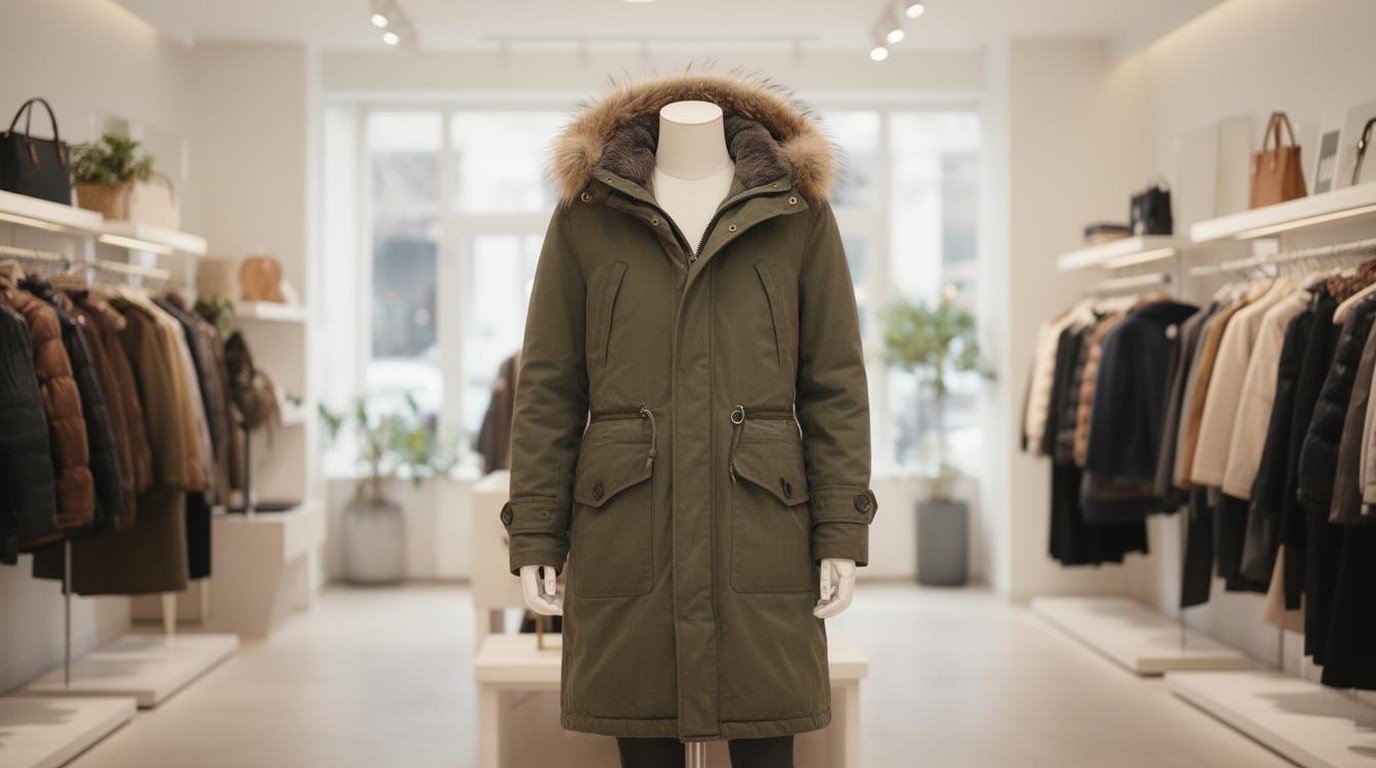
A parka is the piece of winter clothing most people wear every day, and it is also the piece they notice first when it fails. A coat that is too short lets the wind into the lower back. A hood that blocks side vision can make a walk along a snowy street feel uneasy. A zipper that snags at the worst moment makes the whole garment feel cheap. These details decide whether a parka is a pleasure or a daily frustration.
This guide looks at length, hood design, zippers, storm flaps and cuffs, and explains what to check in a shop or in a product listing. It covers general fit and design, not the performance of any individual parka. Whatever you choose, make sure you can move freely in it, and that you can see and hear clearly with the hood up, especially near traffic.
Read this if you are shopping for a parka for daily cold, driving and outdoor work. You can skip it if you already own a parka that fits and covers you well.
Length and coverage
Parka length usually falls into three bands. A hip-length parka suits active use and driving, since it does not bunch up when you sit. A thigh-length parka covers more of the body and suits colder, windier days or people who stand for long periods. A knee-length parka is the warmest and most protective, but it can be bulky in a car and restrict movement when you walk.
Try the length in a seated position. Sit in a chair or in the driver’s seat and check whether the back of the coat rides up. A parka that stays in place when you sit keeps the cold away from the lower back, which is often the first area to feel chilled.

Hood design
A hood should keep the head warm, stay in place in wind and leave you able to see and hear clearly. A fixed hood is simple and warm, but it may not fit over a hat. A removable hood gives flexibility, though a weak attachment can fail in the cold. Look at the volume of the hood and whether it has drawcords at the back and sides.
A fur or synthetic ruff around the face can block wind and reduce the chill around the cheeks. Check that the ruff does not restrict side vision or hearing. A hood that narrows your view is a real hazard near roads, so test it in front of a mirror by turning your head left and right, and make sure you can hear traffic and voices clearly.
Zippers and storm flaps
The zipper takes a lot of stress every time you open and close the coat, so its quality matters. Coil zippers are flexible and light, while chunky metal zippers are strong but heavier. A zipper that is too small may catch on fabric, and one that is too large can feel stiff in gloves. Look for a pull tab big enough to grip with a gloved hand.
A storm flap is a strip of fabric that covers the zipper from the inside and blocks wind from entering through the teeth. Some parkas also have a flap at the chin. A water-resistant zipper adds protection in wet snow, though it does not replace a good storm flap. Check that the flap lies flat and does not pinch the skin when the coat is zipped.
Cuffs, hem and draft control
Cuffs and the hem decide how well a parka keeps the cold out. Elastic cuffs seal the wrist and stop snow from sliding up the sleeve, while thumbhole cuffs keep the sleeves in place. A hem drawcord lets you tighten the bottom of the coat when the wind picks up. These details are small, but they make a large difference on windy days.
Check that the drawcords can be adjusted with gloves on, and that the ends are secured so they do not dangle or catch on doors and vehicle hardware.
Fit for layers and movement
A parka should fit over a sweater or a mid layer without straining the shoulders or arms. In the fitting room, reach forward, raise your arms and bend at the waist. The sleeves should not ride up, and the coat should not pull across the back. Remember that the insulation you choose changes the fit, so try the parka with the layers you plan to wear. The principles in our guide to down and synthetic insulation explain how the warmth inside the coat changes its bulk.
Pockets and easy access
Pockets decide how often you reach for the parka and how comfortable it feels. Hand pockets should sit high enough that they do not fall under a backpack hip belt, and they should be lined with a soft fabric that does not chill the fingers. A zippered inside pocket keeps keys and a phone secure. Some parkas have a pocket sized for modern phones that can be reached with gloves on. Check that the zippers work easily with gloves and that the pockets are not so deep that the contents rattle.
Insulation at the back and the seat
A parka that stops at the waist leaves the lower back exposed when you bend or sit, and the back is one of the first areas to feel cold. Look for insulation that extends below the waist, and for a back panel that stays in place when you move. Some designs add extra insulation at the back of the hood and the shoulders, where heat escapes quickly. Test the parka by bending forward and sitting down. If the back of the coat pulls up or gaps, the design may not suit cold, active use.
Visibility in winter
Winter days are short, and early evening darkness can make pedestrians hard to see. Reflective trim on the sleeves, the hood or the back helps drivers spot you at night, and a bright color improves visibility in snow and fog. Choose a parka that does not hide reflective details under a heavy hood, and check that the trim remains visible when the coat is zipped.
The short version
Choose a parka length that suits how you move, check the hood for both warmth and visibility and look for zippers with a storm flap and a pull you can grip with gloves. Test the cuffs and drawcords, and make sure the coat fits over the layers you actually wear. A parka that covers the lower back, keeps the wind out and lets you see clearly is the one you will reach for every morning.
Parka myths
Myth: A longer parka is always warmer.
Reality: Length helps coverage, but insulation and fit matter just as much. Check how the coat sits when you sit and bend.
Myth: The hood size does not matter.
Reality: A hood that blocks side vision can be a hazard near traffic. Test it with a mirror.
Myth: Any zipper will do.
Reality: A zipper with a storm flap and a grippable pull is far more useful in wet, cold weather.